

Self-Storage SEO: The Complete Guide for Facility Owners
Self-storage is one of the purest local search businesses there is. Almost nobody drives across a city to rent a unit. They search, they look at the map, they call or click one of the first few results, and they rent.
That makes search visibility close to the whole game for an independent operator. It also makes it winnable, because the biggest competitors in your market are usually running a national template that nobody has thought about locally in years.
This guide covers what actually moves the needle, in the order it matters. If you only get through the first two sections, you will still have done most of the work.
How Google decides who shows up
Two different results are competing for attention on a storage search, and they work differently.
The map pack is the block of three business listings with the map. It is driven primarily by your Google Business Profile, and it sits above everything else. For local storage searches this is where most clicks go.
The organic results are the traditional blue links below. These are driven by your website.
You need both, but if you have limited time, the map pack is worth more.
Google evaluates local results on three things it names directly:
- Relevance. How well does this business match what was searched?
- Distance. How far is it from the searcher, or from the location they specified?
- Prominence. How well known and well regarded is this business?
You cannot change your distance. You can change relevance and prominence substantially, and most independents have barely tried.
Whitespark’s 2026 Local Search Ranking Factors survey of local SEO experts weights the map pack signal groups roughly like this (Whitespark, 2026 Local Search Ranking Factors):
| Signal group | Weight |
|---|---|
| Google Business Profile signals | 32% |
| Review signals | 20% |
| On-page signals | 15% |
| Behavioral signals | 9% |
| Link signals | 8% |
| Citation signals | 6% |
| Personalization | 6% |
| Social signals | 4% |
Treat those as directional rather than exact. The ordering is what matters, and it tells you where to spend your first hour.
1. Google Business Profile: a third of everything

Your Google Business Profile is the highest-leverage asset you own, and it is free. Most storage facilities have one that was claimed years ago and never touched since.
Claim and verify it. If you have not, nothing else here matters. If someone else claimed it, you can request ownership.
Get the primary category right. “Self-storage facility” is the one you want. Add relevant secondary categories such as “moving and storage service” or “RV storage facility” only where they are genuinely accurate. Categories are the strongest single relevance signal in the profile.
Complete every field. Hours, holiday hours, phone, website, description, attributes, opening date, service area. Google gives more visibility to complete profiles, and completeness is the cheapest win available.
Use the Products feature for unit sizes. This is the most underused thing in storage local SEO. Every unit size can be a product with a photo, a description and a price. It fills your profile with exactly the terms people search and gives you visual surface area in the listing.
Post regularly. Weekly is a reasonable target. Move-in specials, seasonal reminders, a note about a new gate system, a photo of the property. It signals an active business.
Seed the Q&A section. You can ask and answer your own questions. Do it. Put the ten questions your manager fields every week in there, answered properly. If you leave it empty, someone else fills it, and their answer may be wrong.
Upload real photos, regularly. The gate, the office, hallways, unit interiors, the truck turnaround, signage. Fresh photos correlate with engagement.
Keep NAP consistent. Your name, address and phone must match your website and your directory listings exactly, down to whether you write “Avenue” or “Ave.”
The full detail lives in our Google Business Profile management work, and our complete Google Business Profile guide goes deeper on every field.
2. Facility pages: your on-page foundation
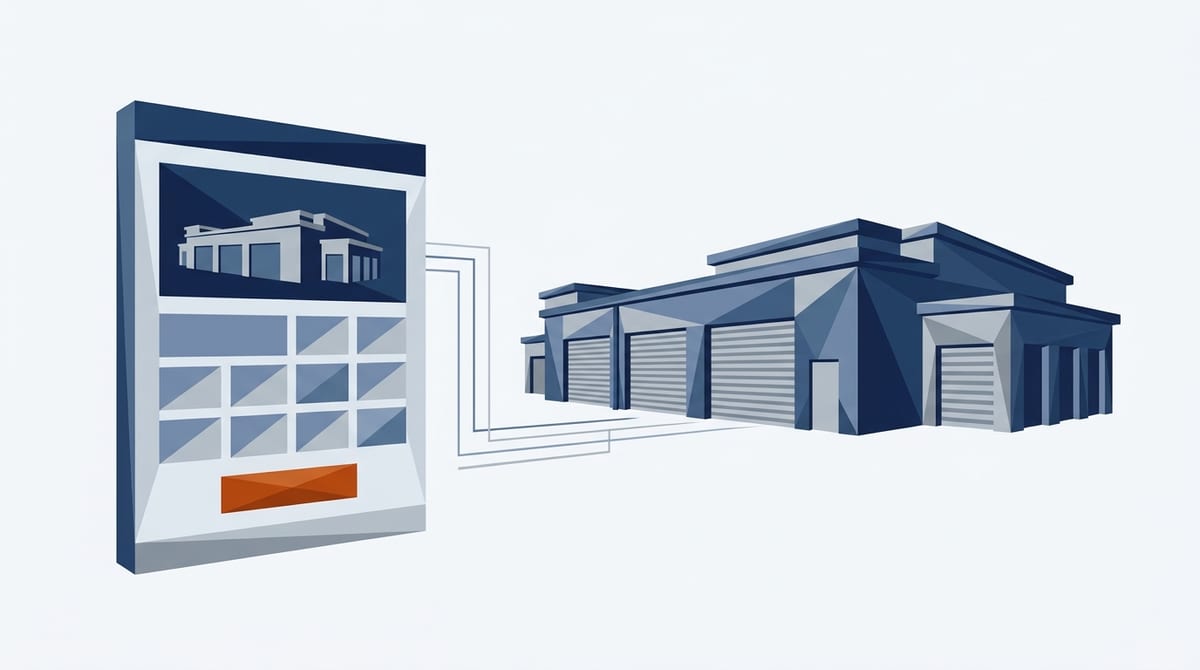
On-page signals are roughly a fifth of local ranking weight, and for storage sites that weight lands almost entirely on one page type.
If you are a multi-location storage business, every physical location needs its own page, on its own URL, with:
- An H1 naming the facility and the city
- Unit sizes with dimensions, plain-language descriptions and prices, in crawlable HTML
- Amenities described specifically rather than listed as checkboxes
- The neighborhoods, landmarks and freeway exits you actually serve
- Access details: gate hours, office hours, drive-up or interior, truck access
- Real photographs of the actual building
- Reviews pulled onto the page
- An FAQ block marked up with schema
- Internal links to unit-size pages
SelfStorageschema- NAP matching your Google Business Profile exactly
- A rent or reserve call to action near the top and again at the bottom
The three failure modes are one page covering all locations, pages under 100 words, and the same copy repeated across every location with the city name swapped.
This is covered end to end, with a copy-paste schema block, in Self-Storage Facility Pages: The SEO Multiplier.
3. Reviews: more weight than links

Review signals carry roughly 20 percent of map pack ranking weight, second only to your Google Business Profile. For storage they also carry most of the conversion decision, because a first-time renter is trusting you with their possessions.
Ask systematically. The best moment is at move-in, in person, while the customer is standing in front of the manager and is happy. A printed card with a QR code outperforms an email by a wide margin.
Velocity beats volume. Published analysis is consistent on this: a steady flow of recent reviews signals an active business more strongly than a large pile of old ones. Forty reviews with the newest from 2023 reads worse than fifteen with three from last month.
Respond to all of them. Every review, good and bad, within a few days. Responses are visible to customers and demonstrate an operator who is paying attention.
Handle negative reviews properly. Storage generates a predictable set of complaints: rate increases, auctions, access issues, pests. Respond calmly, factually, without arguing, and move the specifics to a phone call. Future customers are reading your response far more than the complaint.
Never buy reviews. It is against Google’s policies, it is detectable, and the downside is losing the profile that carries a third of your visibility.
4. Citations and listings

Citations are only around 6 percent of map pack ranking weight, but they are foundational: inconsistent listings actively suppress you, so this is about removing a problem rather than gaining an advantage.
Get your NAP correct and identical across the major aggregators and the storage-specific directories: Apple Maps, Bing Places, Yelp, Facebook, the aggregators that feed everything else, and the storage marketplaces.
Do it once, do it properly, then check it annually. It is a maintenance task, not a growth channel. Chasing hundreds of low-quality citations is wasted effort.
5. Links: the slowest, most durable signal
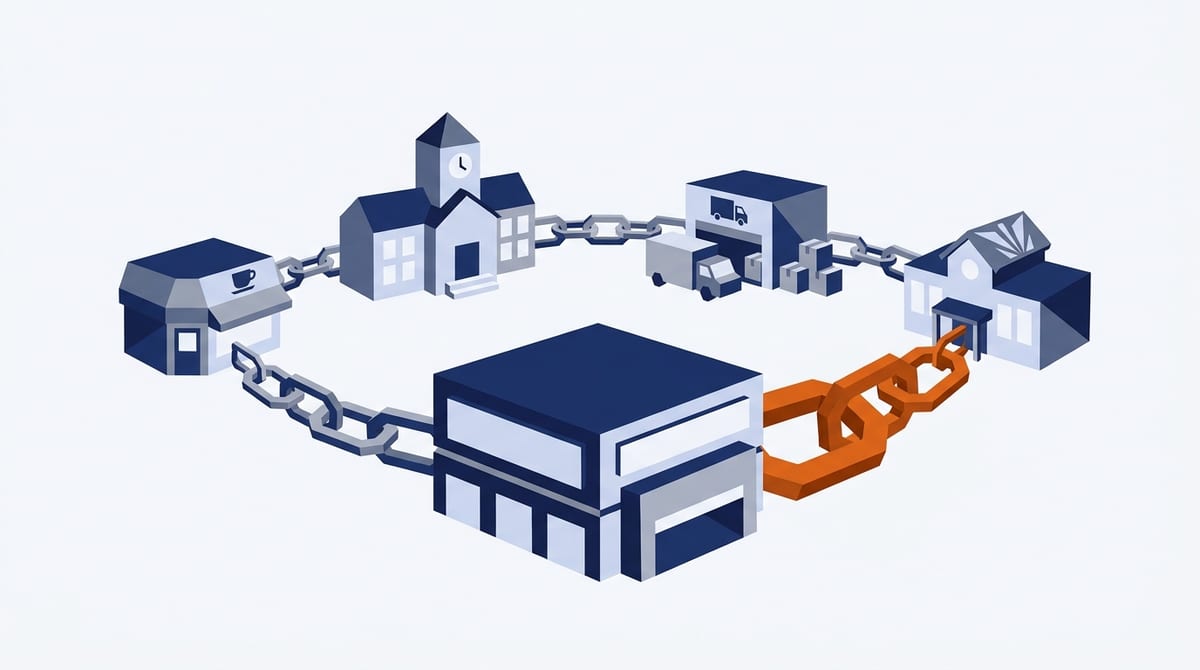
Links are only around 8 percent of map pack weight, but around 24 percent in the regular local organic results below the map, and they are the hardest part of SEO for a small operator. The good news is that local links are genuinely achievable in a way that national links are not.
What works for storage:
- Local sponsorships. Youth sports, school fundraisers, community events. These produce real links from real local sites.
- Chamber of commerce and local business associations.
- Partnerships with adjacent businesses. Moving companies, truck rental, real estate agents, apartment complexes, contractors. Mutual referral pages benefit both sides.
- Local press. A new facility, an expansion, a community donation, a storage drive after a local emergency. Local outlets need stories.
- Genuinely useful local content. A guide to moving in your city, or what to know about storing an RV given your local climate, can earn links on merit.
Ignore anyone selling packages of hundreds of links. That is a risk, not a strategy. You want to work at building links, but with a natural, organic feeling cadence.
6. Technical basics
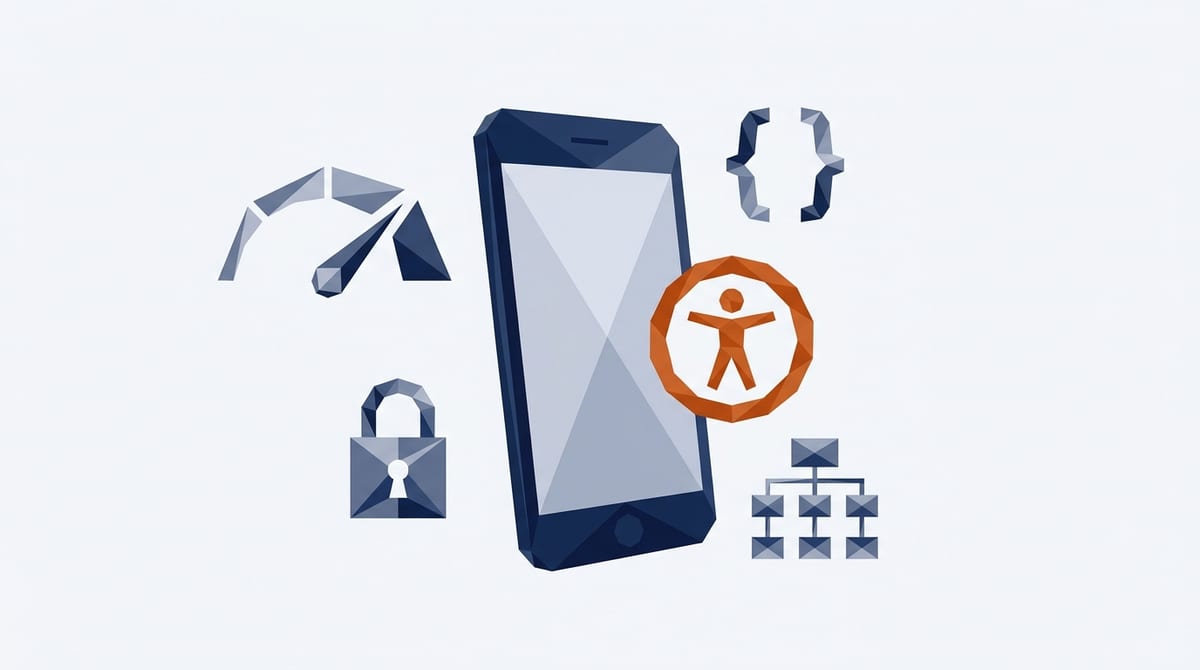
You do not need a technical SEO specialist for a storage site, but these need to be right.
Mobile first. Most storage searches happen on a phone, frequently while someone is standing next to a loaded truck. If the site is hard to use on mobile, nothing else matters.
Speed. Aim to pass Core Web Vitals. Compress images, keep the theme light, use decent hosting.
Schema markup. SelfStorage on facility pages, FAQPage on FAQ blocks, BreadcrumbList on navigation, Organization on the site. This is still unclaimed ground in storage and it matters increasingly for AI search results.
Clean URLs and internal linking. /locations/ocala-fl/ rather than /page-id-4471/. Link facility pages to unit-size pages and back.
HTTPS, an XML sitemap, and a sane robots.txt. Basic hygiene.
Make sure your content is crawlable. The most common technical failure in storage: unit sizes and prices exist only inside a JavaScript rental widget that Google cannot read. Duplicate that information in plain HTML on the page.
Accessibility: SEO and legal protection in one
Accessibility means your site works for people using screen readers, keyboard navigation and other assistive technology. For storage operators it matters twice: it is a ranking issue and a legal one.
The legal risk is real. More than 5,000 digital accessibility lawsuits were filed in 2025, and 64 percent of the companies sued had under $25 million in annual revenue (UsableNet). Serial plaintiffs file in volume, often without ever visiting the business. We know of a facility owner sued by someone out of state who never set foot on the property, because the business address was missing from the website. It settled through insurance.
There is no compliance certificate. No badge or seal makes a site immune from a claim. The benchmark courts and settlements generally reference is WCAG, at Level AA. Avoid “accessibility overlay” widgets sold as a one-click fix. They are widely criticized and have been named in lawsuits themselves.
The SEO upside is the same work. One H1 and logical headings, alt text on every image, descriptive link text (“reserve a 10×10 unit,” not “click here”), good color contrast, real text instead of text inside images, and a fast mobile experience. Every one of those helps screen reader users and Google at the same time.
Check it yourself, for free, every quarter. Run Google Lighthouse (built into Chrome) on every page, not just the homepage. Try your site with your phone’s built-in screen reader turned on. Then keep a simple log of what you checked and when. A perfect score is no guarantee against a claim, but a documented, good-faith routine is your best protection.
7. Content beyond facility pages
Once the foundation is in place, content extends your reach.
Unit-size pages. One page per size, covering dimensions, what fits, what it costs, who typically rents it. These capture high-intent searches like “10×20 storage unit near me.”
Use-case pages. Vehicle storage, RV and boat storage, business storage, student storage, military storage. Each is a distinct customer with distinct searches, and vehicle and RV storage in particular carry strong volume.
Local guides. Moving to your city, seasonal storage advice, what a local climate does to stored goods. This is where you earn local links.
FAQ content. Every question a customer asks is a search someone is running.
8. AI search and what it changes

A growing share of searches now get answered by an AI summary rather than a list of links, whether that is Google’s AI results, ChatGPT, or an assistant.
Three things matter for being included:
Structured data. Schema is how machines understand your page unambiguously. This is now the strongest practical argument for implementing it.
Direct answers. Content structured as a clear question and a clear, complete answer gets lifted. Rambling paragraphs do not.
Entity consistency. Consistent NAP and consistent descriptions across the web make you a well-defined entity, which makes you easier for a model to cite confidently.
The underlying work is the same work. Complete profile, structured data, clear answers, consistent information. It is the existing fundamentals, weighted differently.
What order to do this in

If you are starting from nothing:
- Week 1. Claim and complete the Google Business Profile. Primary category, every field, unit sizes as Products, ten photos.
- Week 2. Rebuild one facility page properly against the checklist above.
- Week 3. Set up a review request process at move-in. Respond to every existing review.
- Week 4. Fix NAP consistency across the main directories.
- Month 2. Add schema. Add unit-size pages.
- Month 3 onward. Weekly GBP posts, a steady flow of reviews, local link building, content.
That order is deliberate. It front-loads the highest-weight, lowest-effort work.
How long it takes

Realistically: Google Business Profile improvements can show within weeks. On-page work typically takes one to three months to be reflected. Links and reviews compound over six to twelve months.
Anyone promising first-page results in thirty days is either lucky or lying.
One anonymized Southern California facility we work with saw search impressions grow roughly 12 times and clicks rise about 70 percent, with occupancy moving from 81 percent to 93.5 percent across seven months. That was a new domain with a low starting baseline and a full program, not a single tactic, and results vary with market competitiveness.
Doing it yourself, or not

Everything here is genuinely doable by an operator who is willing to spend a few focused hours a month. There is no secret. The reason most facilities do not rank is not that it is hard, it is that nobody has done it.
If you would rather it were handled, that is what we do, storage only, one facility at a time, working with the website you already have. Our pricing is published, there is no platform to migrate to, and we hold one facility per five-mile radius so we are never working for your competitor.
See plans and pricing · What is included · Get a free visibility audit
Related reading
– Self-Storage Facility Pages: The SEO Multiplier
– How to Optimize Your Storage Facility’s Google Business Profile
One Comment
Comments are closed.